01
Archetype
How do you naturally show up when you lead?
Your recurring posture: the pattern you return to before conscious choice. Examples: Catalyst, Stabilizer, Architect, Pioneer.

ProfileOS makes a leader’s full pattern visible: how they naturally show up, what they can reliably do, where their influence comes from, and the kind of situation they are leading through.
It gives language to the parts of leadership that a résumé, personality type, or competency list leaves out.
A leader can be strategic without being charismatic. Trusted without holding formal authority. Excellent at building something new and poorly suited to preserving what already works.
Most leadership tools collapse those differences into a type, score, or list of strengths.
ProfileOS keeps them separate long enough to show the pattern.
What kind of leader are you? It is: How do you lead, why do people follow, and what does this moment require from you?
Each lens answers a different question. None is a complete description on its own.
How do you naturally show up when you lead?
Your recurring posture: the pattern you return to before conscious choice. Examples: Catalyst, Stabilizer, Architect, Pioneer.
What can you reliably do?
The learned skills and practiced abilities you can strengthen, combine, and deploy deliberately. Examples: System Design, Conflict Navigation, Creative Craftsmanship.
Why do people trust your lead?
The real basis of your influence, whether or not it comes from your title. Examples: Moral Authority, Expert Authority, Network Authority, Lived-Experience Authority.
What kind of moment are you leading through?
The context that changes which leadership is useful, insufficient, or actively harmful. Examples: Zero-to-One, Trust Rebuild, Political Maelstrom, Managed Exit.
Your authority is not your title. And none of them can be understood without the arena.
A single card names one part of a leader. A composition shows how the parts interact.
Enters unfamiliar territory, gives emerging ideas tangible form, and earns trust through direct experience.
Creates calm after fracture, restores cultural coherence, and rebuilds credibility through consistent action.
Reads the informal system, builds coalitions across boundaries, and aligns interests that do not naturally agree.
Creates durable structures, fair rules, and balanced incentives so complexity can function without constant control.
When capability, authority, or context changes, the meaning of the card changes too.
There is no universally effective archetype. Leadership fit is the relationship between the person, the tools they can deploy, the authority available to them, and the conditions they are entering.
Creates urgency, momentum, and belief before certainty exists.
May move toward the future before people have received truth, repair, or emotional space.
Protects values, restores coherence, and helps people believe the institution can be trusted again.
May defend the familiar after reinvention has become necessary.
Builds structures and governance that allow complexity to thrive.
May design the perfect system while the immediate situation still needs triage.
Absorbs anxiety and creates room for clear action.
May protect stability when the organization needs acceleration and disruption.
It asks: Good for what - and good here?
A shadow is not a hidden defect or opposite trait. It is often the strength itself - used too intensely, too automatically, or in a context that needs something else.
You do not eliminate a shadow. You learn to notice when a trusted strength has stopped serving the moment.
The goal is not to become every kind of leader. It is to see your defaults clearly enough that they are no longer your only option.
Choose the archetypes, capabilities, and sources of authority that most accurately describe how you lead now.
Identify the situation you are actually in - not the one the organization claims to be in.
Ask where your natural pattern supports the moment and where it may work against it.
Decide what to deploy, strengthen, borrow from others, or consciously soften.
ProfileOS is a 60-card deck for reflection, coaching, leadership conversations, team composition, and situational diagnosis. The cards are meant to be selected, compared, moved, challenged, and recombined.
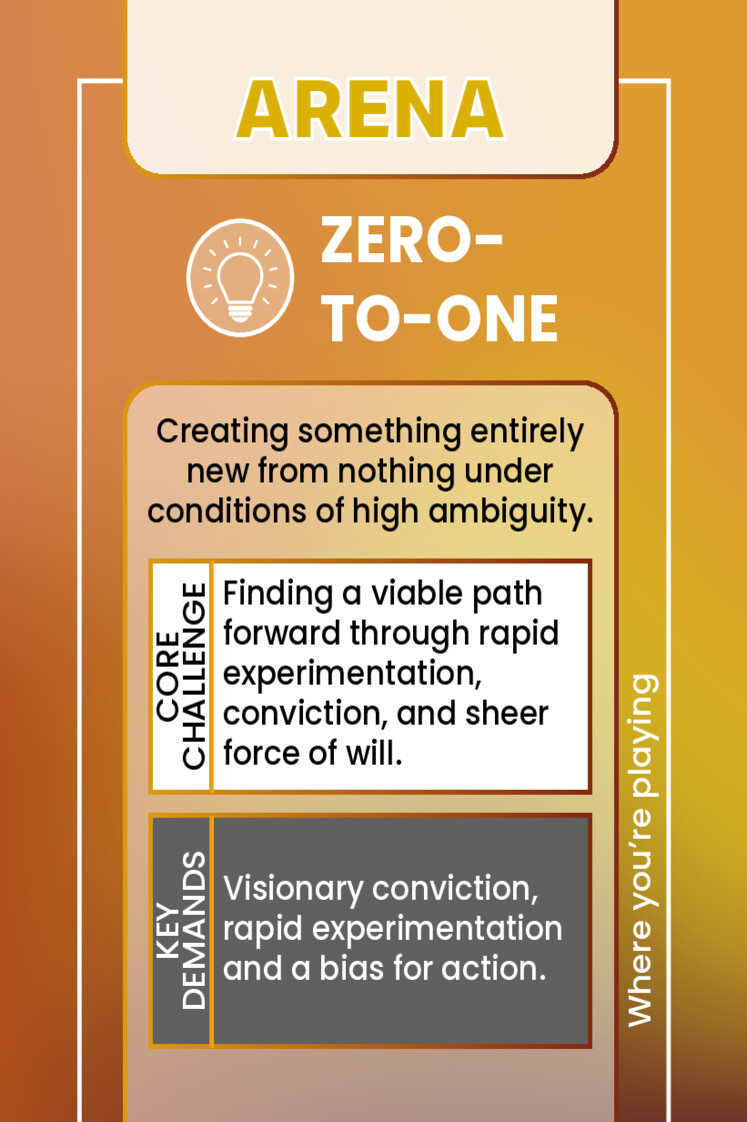
Creating something entirely new from nothing under conditions of high ambiguity.
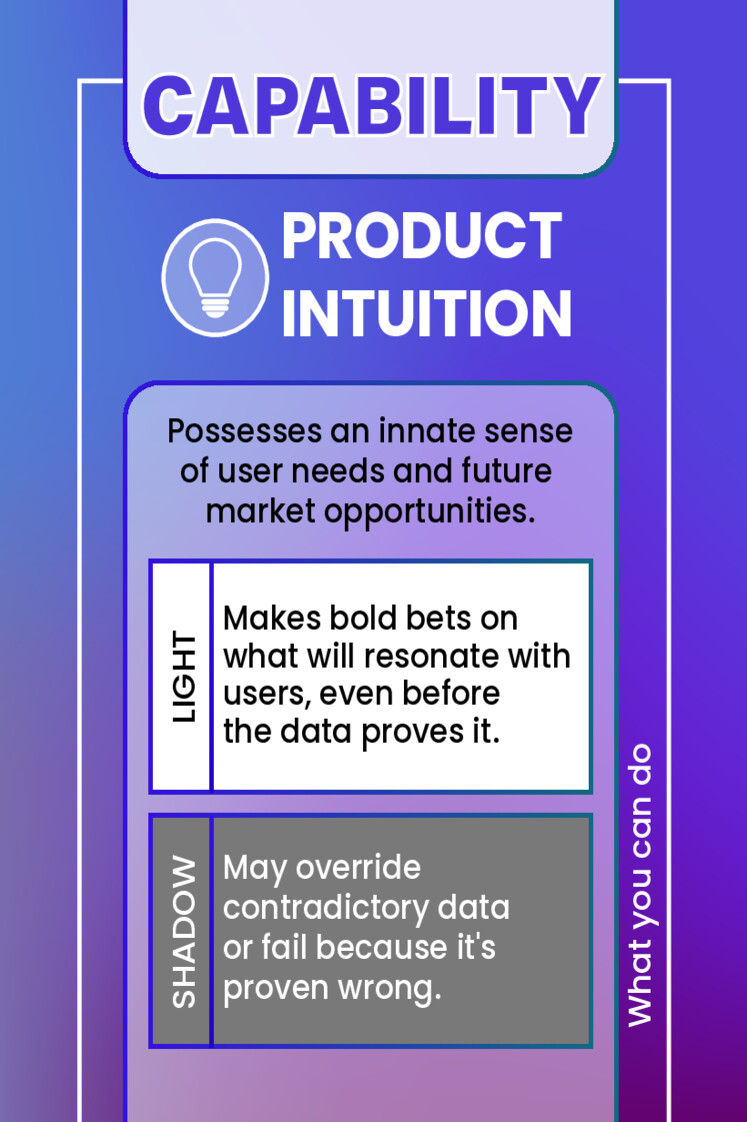
Possesses an innate sense of user needs and future market opportunities.
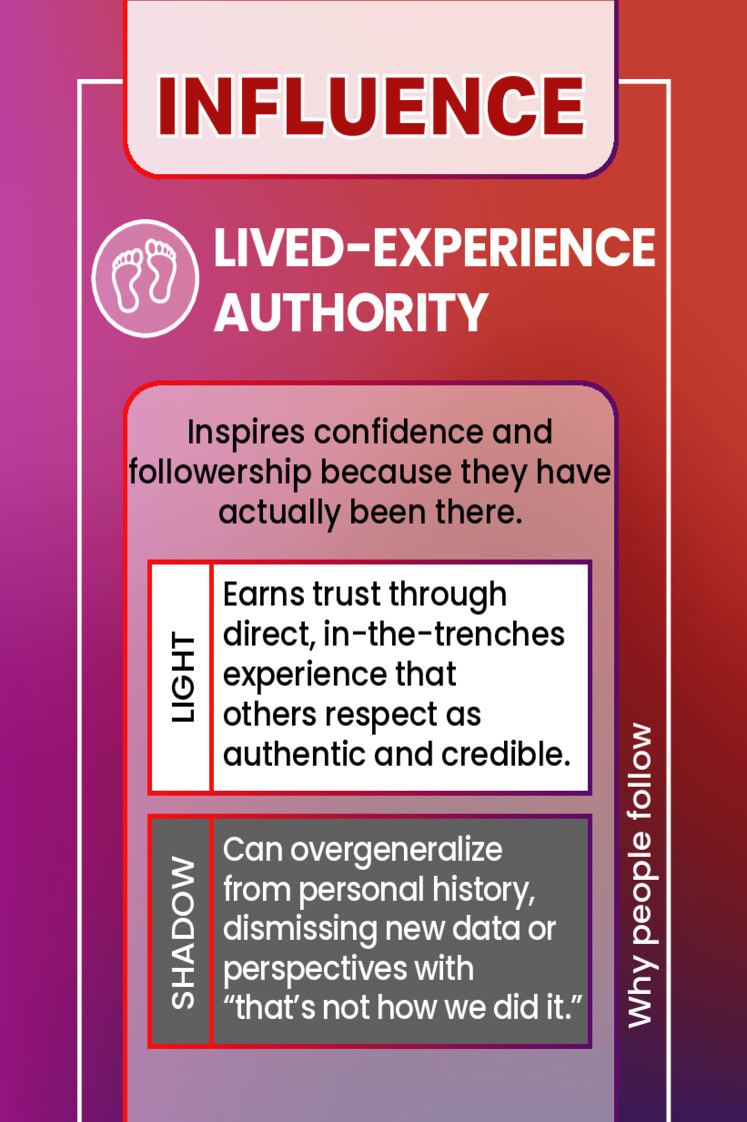
Earns trust through direct, in-the-trenches experience that others respect as authentic and credible.
What you repeatedly do. Where you are most useful. How you earn trust. What the current arena demands. What may be missing. Where a strength may have crossed into shadow.
You are a composition: a recurring way of showing up, a set of capabilities built over time, authority earned from different sources, and a response to the particular moment you are in.
ProfileOS helps make that composition visible - so you can describe your leadership more honestly, understand where it fits, and lead with greater choice.
Use the cards to name what you have long understood but could not quite explain.